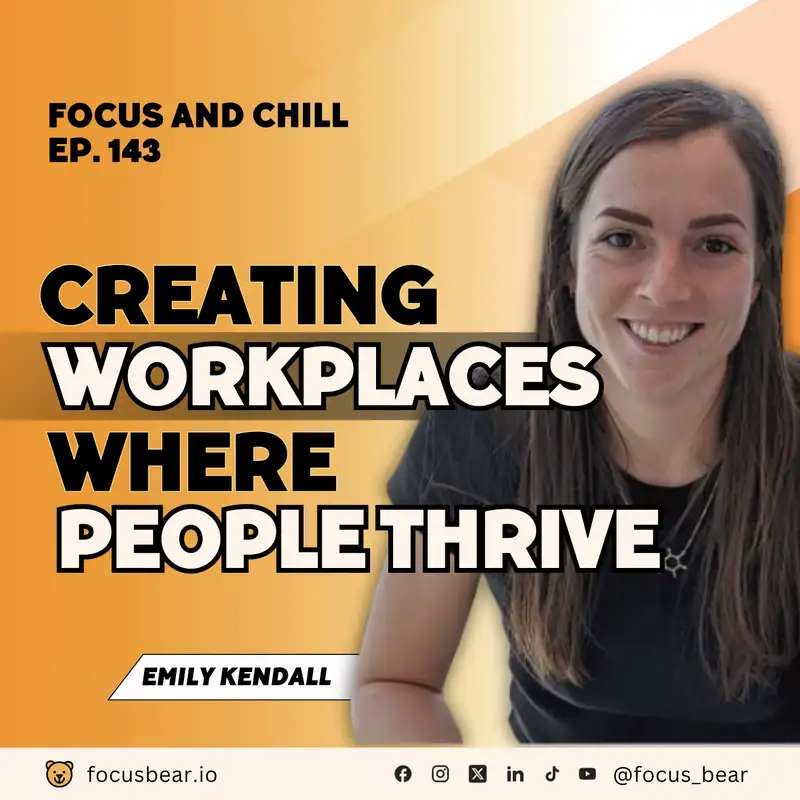
What happens when your performance review focuses on how you communicate instead of the work you actually deliver? Emily Kendall shares her experience of masking ADHD and autism in the workplace, the cost of trying to fit the expected mold, and how finding acceptance helped her understand and advocate for her strengths.
Emily Kendall is a neurodivergent engineer and workplace advocate who works to advance neuroinclusion beyond awareness and into action. With over a decade in corporate environments, she has helped establish neurodiversity networks, contributed to advisory forums, and supports organizations in creating more inclusive workplaces.
Episode Highlights
00:08:49 — The hidden cost of masking at workEmily explains how trying to fit conventional workplace expectations led to performance reviews focused on eye contact, fidgeting, and social cues rather than her actual work. She eventually spent so much mental energy trying to appear "right" that there was less capacity left to do the job itself.
00:12:02 — Finding people who helped her feel acceptedTwo people at work helped Emily see that her neurodivergent traits could be strengths rather than weaknesses. Their support gave her the confidence to disclose, advocate for what she needed, and have more constructive conversations with her leaders.
00:16:30 — Why neuroinclusive workplaces benefit everyoneEmily argues that neurodivergent employees often have much more to offer when they aren't spending their energy trying to fit a particular mold. Creating an environment where people can work in ways that suit their strengths can improve both individual wellbeing and business outcomes.
00:18:14 — Challenging workplace hierarchiesEmily talks about "hierarchy blindness" and why she is comfortable questioning senior leaders and challenging established ways of doing things. While this can be a valuable strength, she also discusses the risk of being perceived as someone who doesn't fit the organization's culture.
00:35:17 — Productivity systems that work with ADHDEmily shares how she manages her workload through structured email and calendar systems while also learning that being productive doesn't mean everything has to happen immediately. She reflects on the need to balance efficiency with slowing down, thinking, and giving herself space to respond more deliberately.
Emily closes with a message about responding to difference with curiosity rather than assuming that doing something differently is wrong. For her, acceptance means giving people the freedom to work and live in ways that make sense for them while creating environments where everyone can feel valued.
Connect with Emily:
Connect with Jeremy:
LinkedIn: https://linkedin.com/in/nageljeremy
Email: jeremy@focusbear.io
More from Focus Bear:
Website: https://focusbear.io
LinkedIn: https://www.linkedin.com/company/focus-bear/
Youtube: https://www.youtube.com/@focusbearapp
Twitter: https://twitter.com/focusbear1
Instagram: https://www.instagram.com/focus_bear/
Facebook: https://www.facebook.com/focusbearapp/
Podcast: https://podcast.focusbear.io
#ADHD #Neurodiversity #WorkplaceInclusion

 Episode 143