Ever realize your ‘normal’ isn’t everyone else’s normal?
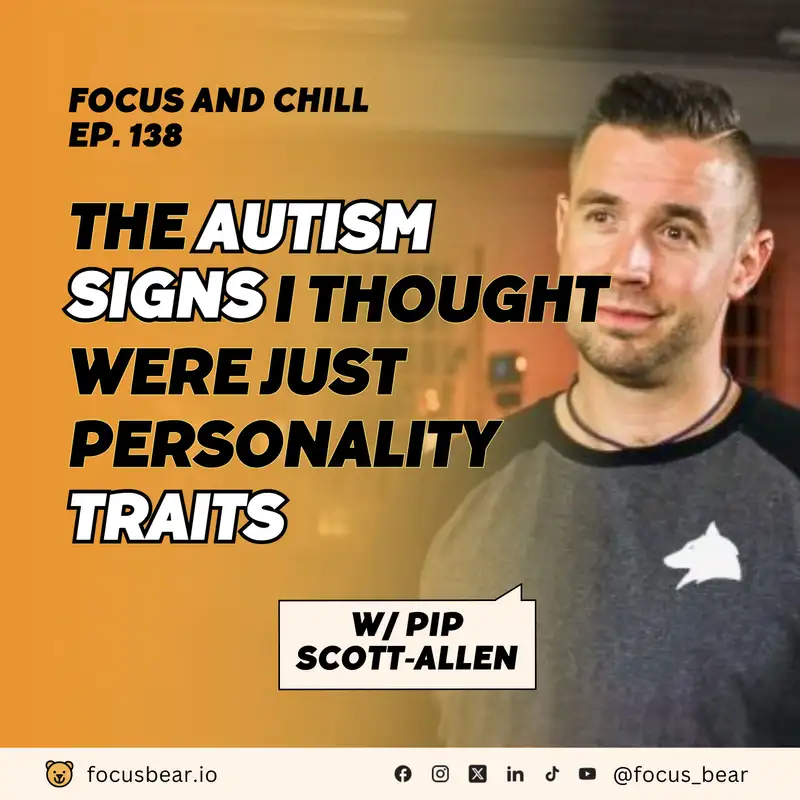
After being diagnosed with ADHD in college, Pip Scott-Allen later discovered he was autistic too. Looking back, a lot of the things he thought were “just quirks” suddenly started making sense, from only drinking out of red cups to avoiding certain clothing textures and carefully balancing food while eating. In this episode, Pip shares what it’s like unpacking a late autism diagnosis after years of masking through leadership and team-building work, and how understanding his sensory needs and communication style has changed the way he approaches work, relationships, and self-acceptance.
Guest Bio
Pip Scott-Allen is a leadership facilitator, speaker, and founder of Premier Team Building Australia. With a background in outdoor education, tourism, and leadership development, Pip helps organizations improve communication, culture, and collaboration through hands-on workshops and team experiences.
Episode Highlights
00:04:08 — Realizing his “quirks” were sensory needs
Pip shares the everyday habits his wife noticed long before his autism diagnosis, from refusing to wear full-length pants to carefully balancing food while eating. What he assumed was just personality or preference turned out to be sensory and autistic traits.
00:06:30 — The red cup rule and other “normal” behaviors
For years, Pip would only drink from red cups and use certain cutlery because other options felt wrong in his hands. The conversation explores how many autistic people assume their internal rules are universal until someone points out otherwise.
00:09:20 — Understanding why masking became exhausting
Before diagnosis, Pip assumed constant exhaustion was just part of life. Looking back, he realized how much energy went into forcing himself through uncomfortable sensory and social situations every day.
00:17:11 — Becoming more honest about sensory triggers
After his diagnosis, Pip stopped forcing himself to tolerate foods and situations that made him deeply uncomfortable. Being more open about textures, safe foods, and sensory needs gave him more energy and reduced self-judgment.
00:27:00 — Why autistic communication is often misunderstood
Pip explains how many neurodivergent people communicate through direct curiosity, while neurotypical people often interpret hidden meanings or emotional undertones. A simple question like “Why are you tying your shoes like that?” can unintentionally sound critical even when it’s genuine curiosity.
00:34:08 — Advice for leaders supporting neurodivergent teams
Pip encourages leaders to listen carefully to what people actually say rather than assuming intent. He also explains why flexibility, clear communication, and understanding sensory needs help neurodivergent employees perform at their best.
Connect with Pip:
LinkedIn: https://www.linkedin.com/in/pip-scott-allen-facilitator-of-awesome-8458a069/
Email: pip@premierteambuilding.com.au
Website: https://premierteambuilding.com.au/
Facebook: https://www.facebook.com/PremierTeamBuildingAus/
Instagram: https://www.instagram.com/premier_team_building/
Connect with Jeremy:
LinkedIn: https://linkedin.com/in/nageljeremy
Email: jeremy@focusbear.io
More from Focus Bear:
Website: https://focusbear.io
LinkedIn: https://www.linkedin.com/company/focus-bear/
Youtube: https://www.youtube.com/@focusbearapp
Twitter: https://twitter.com/focusbear1
Instagram: https://www.instagram.com/focus_bear/
Facebook: https://www.facebook.com/focusbearapp/
Podcast: https://podcast.focusbear.io

 Episode 138