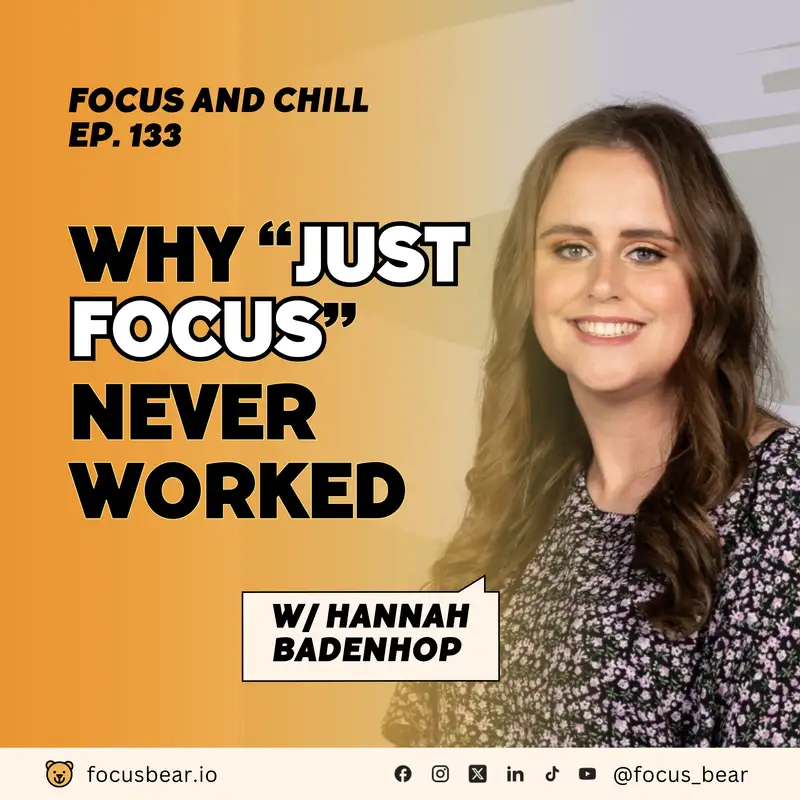
“I always felt a bit like an alien… I was different to everyone else and wasn’t really sure why.”Before her ADHD and autism diagnoses, Hannah Baden Hop kept hearing the same advice: just focus. But in the classroom, that instruction never made sense. In this episode, she shares what school was really like as a neurodivergent student, how understanding her brain changed her confidence, and why visual learning and interest-driven focus made such a difference.
If you’ve ever struggled to pay attention in traditional classrooms, felt “different” growing up, or are supporting neurodivergent learners, this conversation explores what actually helps and why one-size-fits-all learning often misses visual thinkers.
Hannah Badenhop has worked across multiple roles at Autism South Australia, where she champions neuro-inclusive practice through community engagement and resource development. As a neurodivergent professional herself, she contributes to initiatives such as Neuro Inclusive Recruiting and the Autistic Guide to Adulthood, helping ensure autistic voices shape the supports designed for them.
00:02:46 — Feeling like an outsider in class Hannah describes growing up feeling “like an alien” compared to her peers. Without understanding why she struggled socially and academically, the disconnect was both confusing and isolating.
00:02:55 — When “just focus” didn’t make sense Teachers often told her to simply pay attention, but she couldn’t understand why focusing felt so difficult. The advice created pressure without addressing how her brain actually worked.
00:04:30 — Grades changed when she followed her interests Earlier schooling was difficult when subjects didn’t engage her attention. But once she could hyperfocus on business and graphic design, she achieved top marks, showing how interest-driven focus shaped her learning.
00:07:06 — Why visual learning works better Hannah explains that diagrams, visuals, and varied communication styles help her stay engaged. Lecture-only teaching made it much harder to absorb information effectively.
00:15:16 — Using hyperfocus strategically at work She now watches for moments when her brain “locks in” and uses them to complete high-impact work quickly. Building momentum with quick wins helps on lower-energy days.
00:28:40 — Self-acceptance is a journey Hannah reflects on initially feeling hesitant to disclose her neurodivergence. Over time, connecting with other autistic people helped her grow more confident and accepting of how her brain works.
Connect with Hannah:
LinkedIn: https://www.linkedin.com/in/creativemarketingdesigner/
Connect with Jeremy:
LinkedIn: https://linkedin.com/in/nageljeremy
Email: jeremy@focusbear.io
More from Focus Bear:
Website: https://focusbear.io
LinkedIn: https://www.linkedin.com/company/focus-bear/
Youtube: https://www.youtube.com/@focusbearapp
Twitter: https://twitter.com/focusbear1
Instagram: https://www.instagram.com/focus_bear/
Facebook: https://www.facebook.com/focusbearapp/
Podcast: https://podcast.focusbear.io
Tiktok: https://www.tiktok.com/@focusbear

 Episode 133