Burnout is your body telling you: stop. I’m going to make you stop.
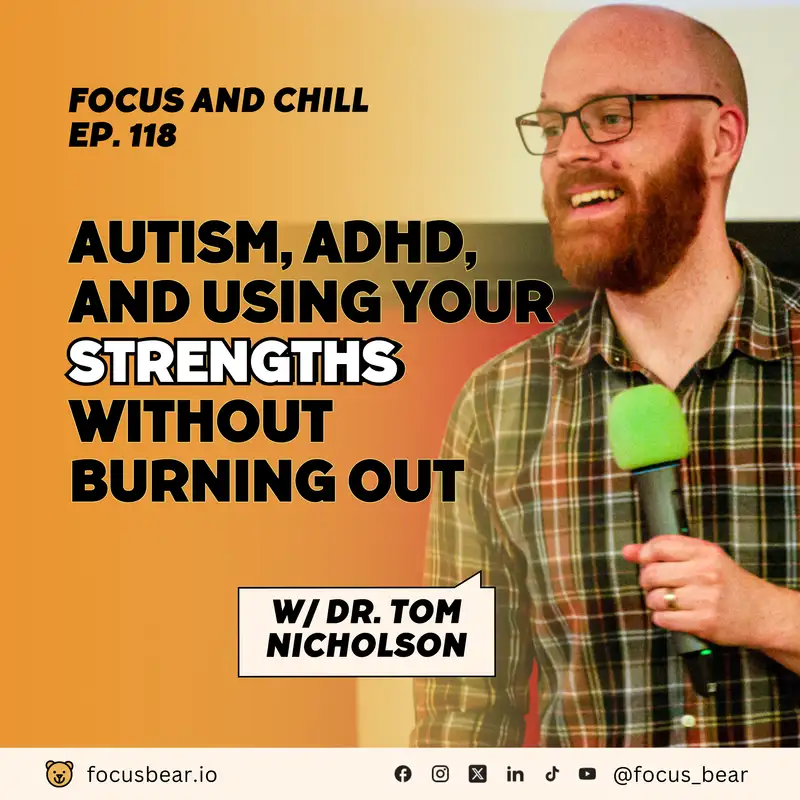
In this episode, Dr Tom Nicholson breaks down how productivity, overperformance, and even “success” can quietly become coping mechanisms that lead to burnout. Drawing from lived experience, academia, and clinical work, he explores how neurodivergent people can use their strengths without masking themselves into exhaustion.
Dr Tom Nicholson is an assistant professor of mental health nursing, public speaker, and trainer specializing in neurodivergence and inclusion. He combines lived experience with clinical and academic expertise to help individuals and organizations rethink productivity, burnout, and sustainable ways of working.
Episode Highlights
00:02:12 – Diagnosed with ADHD at five and labeled “the problem child” Dr Tom describes being diagnosed in the mid-1990s and quickly framed as disruptive rather than supported. Despite doing well academically, he internalized the message that effort and compliance mattered more than wellbeing, laying the groundwork for overworking later in life.
00:03:37 – Discovering autism later in adulthood He explains diagnostic overshadowing and how ADHD became the explanation for every difficulty he had. Autism was missed entirely, even as he became a specialist himself, showing how easily burnout risks can be overlooked when people appear “high functioning.”
00:06:08 – Reframing school trauma and constant effort With a later autism lens, Dr Tom revisits his school experiences and recognizes how much energy went into coping, masking, and adapting. This reframing helps explain why productivity and overperformance often feel compulsory rather than optional.
00:17:30 – Productivity works in bursts, not all day Dr Tom explains that his productivity comes in intense, focused bursts followed by long recovery periods. Expecting steady, all-day output ignores how many neurodivergent brains actually function and pushes people into boom-and-bust cycles.
00:25:23 – Early fatherhood collides with productivity culture He speaks candidly about sleep deprivation, routine collapse, and identity shifts during the first year of parenting. Hustle culture and productivity myths make this period far harder, especially for neurodivergent parents with high sensory and rest needs.
00:32:36 – When productivity advice turns into self-punishment Dr Tom reflects on consuming large amounts of self-help and productivity content. Instead of helping, it reinforced the belief that he was never doing enough, turning tools into weapons for self-criticism rather than support.
00:39:30 – Burnout as a forced stop After pushing through a PhD, lockdown, and a newborn, his body shut everything down. He describes burnout not as weakness, but as the body enforcing boundaries when the mind refuses to listen.
00:44:59 – The question behind overworking The episode closes with a powerful reflection: much productivity is driven by old narratives and the need to prove something. Dr. Tom invites listeners to ask whether their drive comes from genuine values or from trying to outrun past judgments.
Connect with Dr. Tom:
LinkedIn: linkedin.com/in/dr-tom-nicholson-089727131
Instagram: https://www.instagram.com/drtomnicholson
Connect with Jeremy:
LinkedIn: https://linkedin.com/in/nageljeremy
Email: jeremy@focusbear.io
More from Focus Bear:
Website: https://focusbear.io
LinkedIn: https://www.linkedin.com/company/focus-bear/
Youtube: https://www.youtube.com/@focusbearapp
Twitter: https://twitter.com/focusbear1

 Episode 118