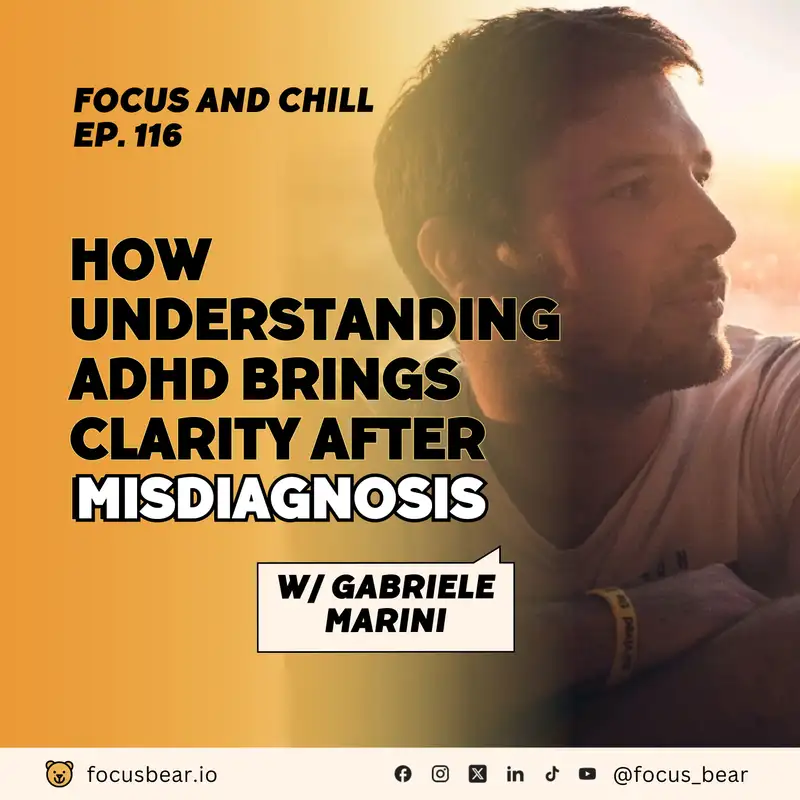
ADHD and high achievement don’t cancel each other out. Gabriele Marini shares how his neurodevelopmental evaluation suggested he was “too smart” for ADHD, which led him to reflect on what ADHD really looks like in adults who appear successful from the outside. He opens up about the pressure to perform, the confusion around symptoms, and how finally understanding his brain allowed him to replace doubt with clarity and self-acceptance.
Gabriele Marini is a PhD researcher and lecturer living in Australia. He studies computational linguistics and brings a unique perspective on ADHD through his academic journey, lived experience, and immigrant background.
Subscribe for more neurodivergent experiences, lived stories, and honest conversations.
🔍 Episode Highlights
00:02:40 — “Why can’t I just sit down and do it?” Gabrielle describes sitting at his desk for hours, rereading the same paragraph and blaming himself for not being able to focus. He explains how trying harder didn’t help and how he punished himself by staying there all day instead of living his life.
00:04:30 — “If I’m lazy… how did I move to another country?” He shares how someone close to him challenged the idea that he was “lazy,” pointing out that moving internationally to pursue a PhD isn’t something a lazy person does. It helped him understand that his struggles weren’t moral failings, but neurodivergent challenges.
00:06:30 — “Your IQ is too high for ADHD.” During a neurodevelopmental evaluation, he was dismissed because his IQ was above average, even though he was anxious, exhausted and struggling daily. This shaped his view of how professionals often misunderstand ADHD in high-achieving adults.
00:07:00 — Sleepless nights, anxiety and invisible suffering Gabrielle explains that his academic success didn’t mean things were easy. It came at the cost of sleeplessness, stress and physical and emotional exhaustion, which people around him rarely saw.
00:17:30 — ADHD as a different way of being He reframed ADHD not as something broken, but as a different way of experiencing the world. Instead of forcing himself to be methodical, he started leaning into his strengths and natural abilities.
00:19:30 — Twin comparisons and identity pain Growing up with a twin led to constant comparison, judgement and feeling “less than.” Those early comparisons deeply influenced his internal identity and self-esteem.
00:32:00 — Listening to his body and avoiding burnout Gabrielle reflects on learning to slow down, notice what his body is telling him and allow himself rest. He explains how pushing through exhaustion led to burnout and why pacing himself is now essential.
00:36:30 — Revenge bedtime procrastination and protecting rest He talks about staying awake late at night as a way to reclaim time and autonomy, even when it harms sleep. He is learning to protect rest, recognizing how much his nervous system actually needs it.
Connect with Gabriele :
Connect with Jeremy:
LinkedIn: https://linkedin.com/in/nageljeremy
Email: jeremy@focusbear.io
More from Focus Bear:
Website: https://focusbear.io
LinkedIn: https://www.linkedin.com/company/focus-bear/
Youtube: https://www.youtube.com/@focusbearapp
Twitter: https://twitter.com/focusbear1
Instagram: https://www.instagram.com/focus_bear/
Facebook: https://www.facebook.com/focusbearapp/
Podcast: https://podcast.focusbear.io
Tiktok: https://www.tiktok.com/@focusbear

 Episode 116